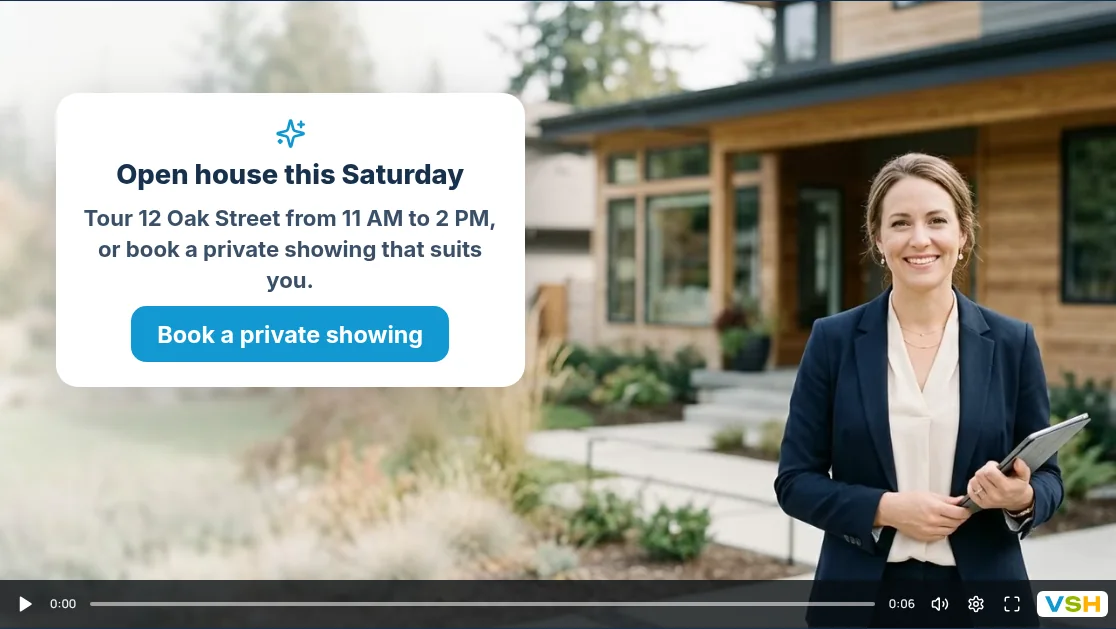
Real estate runs on trust and timing. Buyers want to know who you are before they call, sellers want to know how you work, and open house guests rarely leave more than a name. Here are three practical ways to use interactive video, from the tablet at the door to the link on your listing.
In short
Agents can use interactive video in three ways: a tablet sign-in at open houses that starts over for each guest, listing videos where viewers book a showing, and buyer and seller funnels that ask about area and timing before the first call.
Why interactive video suits agents
People choose an agent they feel they know. A short video lets them hear you before the first call, and a question or two tells you who is buying, who is selling and how soon. Instead of a bare contact form, every lead arrives with their answers.
1. Open house sign-in on a tablet
A paper sign-in sheet gets a name and, with luck, a readable email. A tablet at the door can do more: a short welcome from you, a few quick questions, and contact details, all saved as a lead.
- Build a short funnel: a welcome video, the question “Are you buying or selling?”, and a form for name, email and phone.
- Add one or two questions that help you follow up, such as when they plan to move or whether they already work with an agent.
- Open the funnel on a tablet in kiosk mode. After each guest finishes, it clears their answers and starts over for the next person.
- Stand the tablet by the door, where guests see it as they walk in.
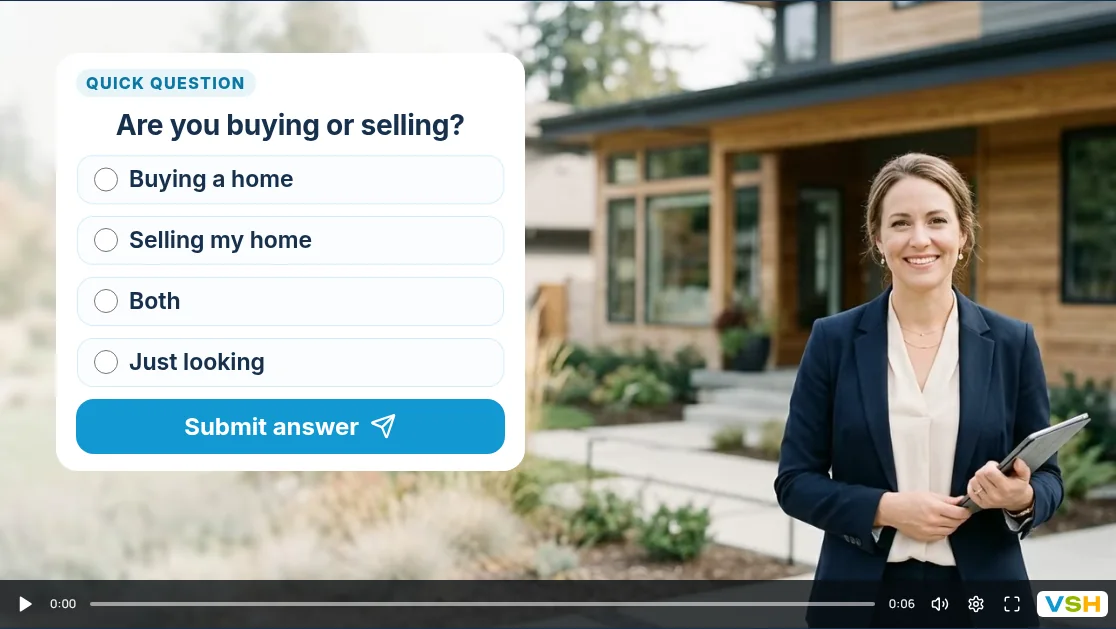
Each guest becomes a normal lead with their answers. Leads from the tablet show Kiosk as their source, so you can tell open house visitors apart from online leads.
Put a printed QR code next to the tablet too. Guests who prefer their own phone can scan it, and scans are tagged so you know where they came from.
2. Listing videos that book showings
A normal listing video ends with the viewer closing the tab. An interactive one can ask a question, or show a pop-up at the right moment with the open house date or a button to book a private showing.
- Walk through the home in short clips, each under a minute.
- Ask what matters to them, such as how many bedrooms they need or when they want to move.
- Let them book a showing inside the video, so they pick a time without calling.
- Offer the brochure in return for an email, for people who are not ready to book.
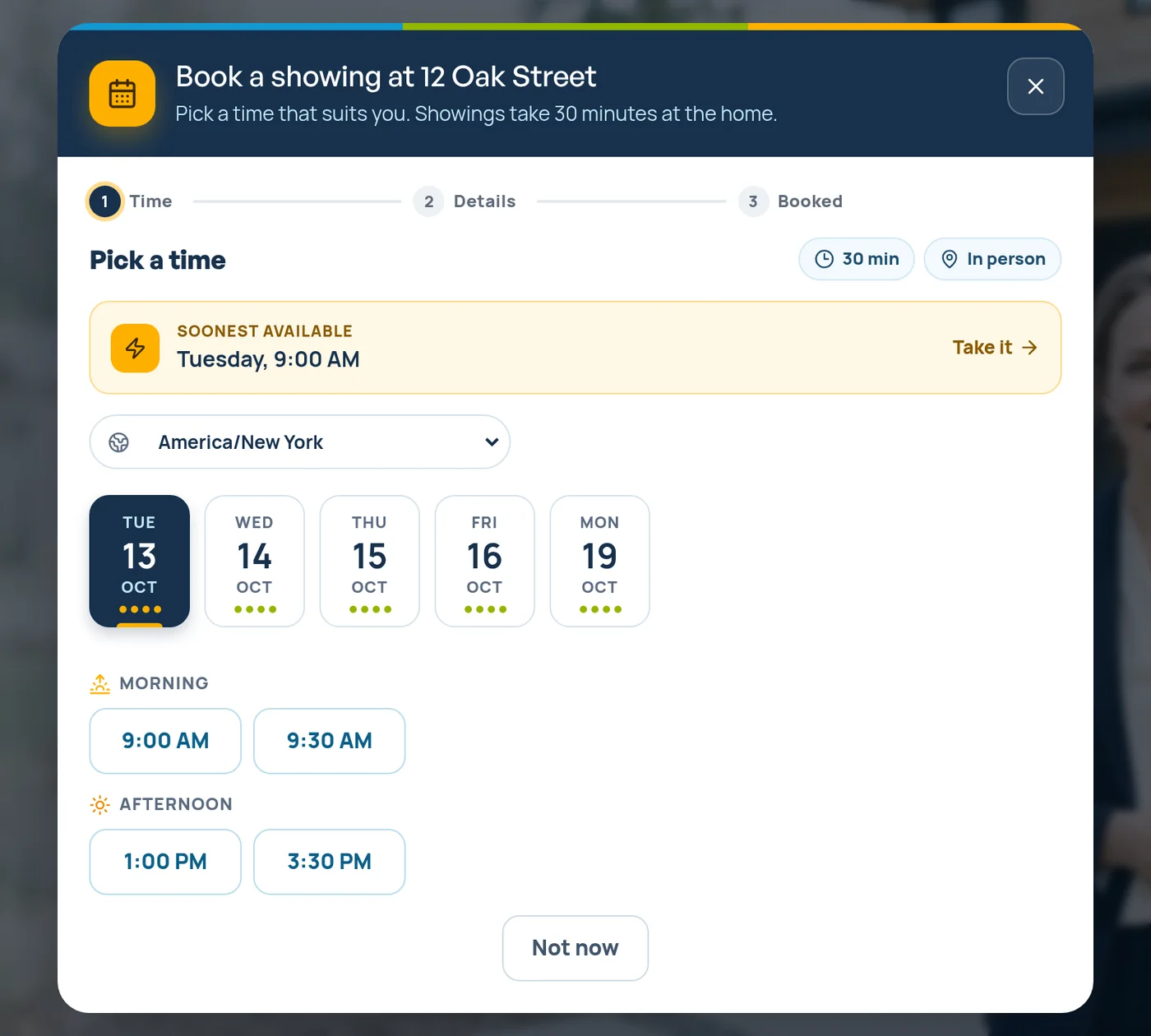
Share the link in your listing description and social posts, or print it as a QR code on the yard sign and flyers.
3. Buyer and seller lead funnels
For your website or ads, one funnel can serve buyers and sellers. The first question splits them, and each path asks what you need to know before the first call.
- Buyers: where they want to live, when they want to move, and whether they have spoken to a lender yet.
- Sellers: where the home is, when they want to sell, and whether they would like a valuation call.
- Just looking: a short video about how you work, and an option to get new listings by email.
Ask everyone the same questions, and keep them about the home and the move: area, timing and what they need. Leave out questions about family, religion, origin or other personal details.
The full list for buyers, and what to leave out, is in questions to ask real estate buyers.
Follow up the same day
A lead from Saturday’s open house is warmest on Saturday. Turn on lead alerts to get an email the moment someone leaves their details, then call while they still remember the home. Their answers are in the lead, so you can skip the questions they already answered.
Messages you can copy, and a simple follow-up schedule, are in how to follow up with open house visitors.
Choosing a tool? See the best interactive video tools for real estate agents.
A starter checklist
- Record a 15-second welcome video. The welcome video script guide has a real estate example to adapt.
- Add one question: “Are you buying or selling?”
- Record a short video for each answer.
- Finish with a booking calendar or a short form.
- Share it as a link, as a QR code, and in kiosk mode on your open house tablet.
More ideas are on the real estate page, and the examples for local businesses show how other fields use the same pattern.